Last Updated: November 10, 2026
Quick Summary
A hygienic nail salon shows its standards before you sit down: clean floors and stations, fresh towels, and staff who wash their hands or change gloves between clients. Tools should come out of sealed, dated packets, not a drawer. Watch for reused files, cloudy disinfectant, and dirty foot basins.
- Staff should wash hands or change gloves before touching you.
- Tools should come out of sealed, dated packets you can watch being opened.
- Single-use files, buffers, and wooden sticks should be thrown out after one client.
- Disinfectant jars should hold clear liquid, not cloudy or dirty solution.
- Two or more red flags are reason enough to decline the service and leave.
Table of Contents
- What a Hygienic Nail Salon Looks Like Before You Sit Down
- Your Nail Salon Sanitation Checklist: What to Inspect
- How Nail Salons Disinfect Tools (And How to Verify It)
- Nail Salon Hygiene Red Flags That Should Make You Walk Out
- Nail Salon Infection Symptoms to Watch For After Your Visit
- Book Your Next Appointment with Confidence at Missouri Nails & Lashes
- Frequently Asked Questions
What a Hygienic Nail Salon Looks Like Before You Sit Down
You can judge a hygienic nail salon before you ever sit in a chair. The signs of a hygienic nail salon show up the moment you walk in: clean floors, organized stations, fresh towels, and staff who wash their hands between clients.
A reused file or a cloudy foot basin is enough to make anyone wonder what else was going on. That worry is fair. Your skin can pick up an infection from a dirty tool or a poorly cleaned basin.
A clean salon looks calm and smells clean, not like a wall of chemicals. You should see staff cleaning stations between clients. You should see tools come out of sealed packets. And you should see every technician wash their hands or put on fresh gloves before touching a client.
Below, you will find what to look for, so you can walk into any salon and judge within a minute whether it meets the bar.
Your Nail Salon Sanitation Checklist: What to Inspect
A nail salon sanitation checklist turns a vague gut feeling into a set of clear checks. Run through these items each visit, and you will spot problems fast.
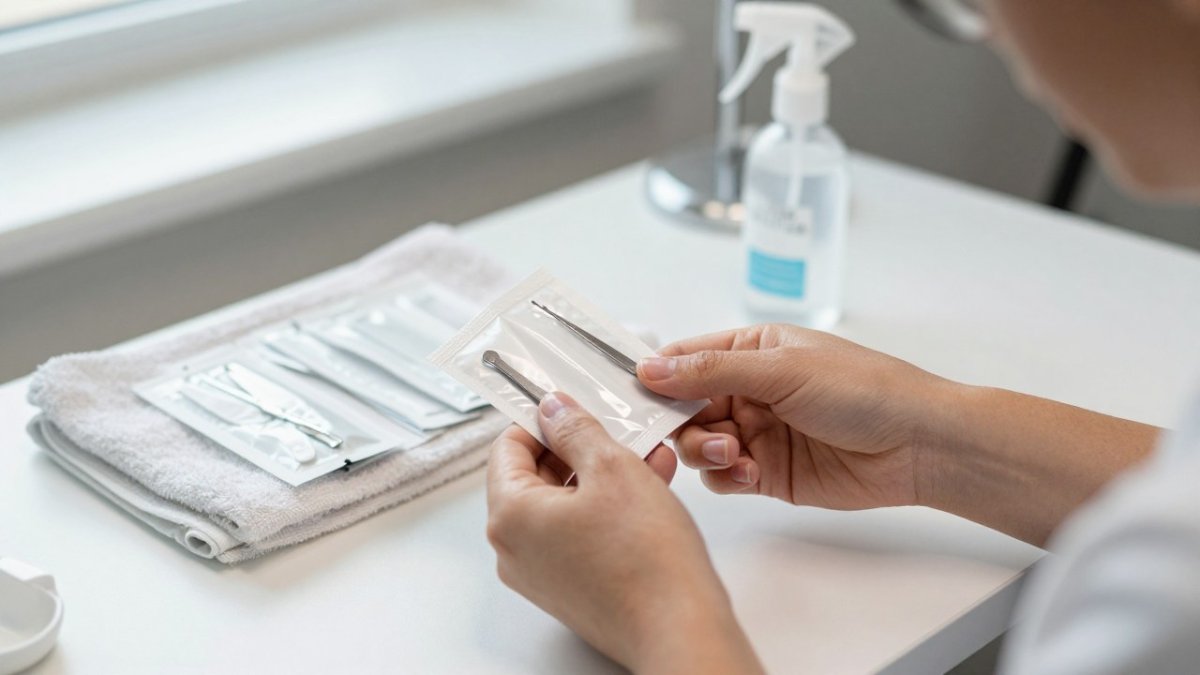
Before you sit down:
- Floors and counters are clean, with no dust, hair, or clippings
- Stations are wiped down between clients
- Staff wash hands or change gloves before touching you
- Tools come out of sealed, dated packets
- Fresh towels and linens are used for each client
- Foot basins look clean, with no film, stains, or debris
- Trash is covered and not overflowing
- The salon displays current licenses for technicians and the establishment
At the station:
- Files and buffers are new or clearly single-use
- Metal tools look clean, with no rust or residue
- Disinfectant jars hold clear liquid, not cloudy or dirty liquid
- Nippers and blades are sharp and stored clean
- You see the technician open sealed sterile packets in front of you
How to verify disinfection and sterilization: Cleaning removes visible debris; disinfection kills most germs on surfaces; sterilization kills nearly all germs on metal tools and requires an autoclave or similar device.
How to check licensing and inspection records: Licensing requirements for nail salons vary, but many states require a license and inspections by a health or cosmetology board. Look for posted licenses near the entrance, or ask staff where they are displayed.
Risk differences by service and tool: Manicures carry risk from reusable files and nippers; pedicures add risk from foot basins and whirlpool jets, which can harbor bacteria if not cleaned between clients.
If most boxes are checked, you are in good hands. For a deeper walkthrough, see this guide on how to find hygienic nail salons with a practical checklist you can keep on your phone.
How Nail Salons Disinfect Tools (And How to Verify It)
Knowing how nail salons disinfect tools helps you check the process instead of guessing.
Cleaning removes visible debris with soap and water. Sanitizing lowers the germ count on surfaces. Sterilization kills nearly all germs on metal tools, and it requires proper equipment, not just a soak.
Here is what the process should look like:
- Used tools go into a dirty bin, never back on the tray
- Tools are scrubbed clean before any soak
- Metal implements sit in a fresh disinfectant solution for the full contact time on the label
- Sterilized tools are sealed in dated packets
- Single-use items like files, buffers, and wooden sticks are thrown out after one client
How to verify it: Watch where tools come from. If a technician reaches into a drawer and grabs a loose file, that file has likely been used before.
Also check the disinfectant jar. Cloudy or dirty solution means the tools are not being cleaned properly. Ask how they sterilize their metal tools, and a good salon will answer without hesitation.
The U.S. Environmental Protection Agency guidance on disinfectants explains why using the right product for the full contact time matters. Skipping either step leaves germs behind.
The article breaks the process into three stages, each with a different job, and the table below lays them out side by side.
| Stage | What it does | Key requirement |
|---|---|---|
| Cleaning | Removes visible debris | Soap and water |
| Sanitizing | Lowers the germ count on surfaces | Reduces germs on surfaces |
| Sterilization | Kills nearly all germs on metal tools | Requires proper equipment, not just a soak |
| Single-use items | Files, buffers, wooden sticks | Thrown out after one client |
| Disinfectant jar | Shows whether solution is working | Should be clear, not cloudy or dirty |
Nail Salon Hygiene Red Flags That Should Make You Walk Out
Some nail salon hygiene red flags are worth leaving over. Trust your eyes, because the problems you can see often point to problems you cannot.
Watch for these:
- Strong chemical fumes with no ventilation or fans running
- Tools pulled from a drawer, not a sealed packet
- Cloudy or dirty disinfectant solution
- Reused files, buffers, or wooden sticks
- A foot basin with visible film, stains, or floating debris
- Whirlpool jets that are not cleaned between clients
- Technicians with open cuts or sores on their hands
- No handwashing or glove changes between clients
- Dirty towels or linens reused on the next person
- No visible licenses or inspection records
Watch out: A salon that skips basic cleaning in plain sight is likely skipping the steps you cannot see. One reused file can spread bacteria and fungus between clients. That is a real infection risk, not a small shortcut.
What to do when a salon fails the hygiene check: If you spot one red flag, ask a polite question: “Can you show me how you clean and sterilize your tools?” or “Are these files single-use?” A good salon will answer without hesitation.
How to assess hygiene when procedures are not visible: Some salons clean tools in a back room. Ask to see the disinfection area or the logbook. If they refuse, treat that as a red flag.
If you spot two or more of these, leave. No manicure is worth an infection.
Nail Salon Infection Symptoms to Watch For After Your Visit
Nail salon infection symptoms usually show up within a few days of your appointment. Catching them early makes treatment easier.
Watch for:
- Redness, swelling, or warmth around a nail
- Pain or throbbing in a finger or toe
- Pus or fluid at the nail edge
- A nail that lifts, changes color, or turns thick
- Itching, rash, or small blisters on the skin
- New skin irritation around cuts or cuticles
These signs do not always mean the salon was at fault. Skin can react to products, and small nicks can get infected anywhere. Still, a cluster of symptoms after a visit is worth a call to your doctor.
A PubMed survey of nail technicians found that skin and respiratory symptoms were reported by some workers, which shows how much chemical and tool exposure matters in this trade. Clean practices protect clients and staff alike.
If you notice signs of infection, see a healthcare provider. Do not try to treat a spreading infection at home.
Book Your Next Appointment with Confidence at Missouri Nails & Lashes
You deserve a salon where clean tools and fresh linens are the norm, not a bonus. At Missouri Nails & Lashes, we built our space around that idea: a cozy, stylish salon with clean and safe facilities and a friendly team that treats every client with care.
Our expert nail artists offer manicures, pedicures, eyelash extensions, and microblading, and we aim to keep our stations and tools clean and safe. Busy parents can ask about our kid services, and health-conscious clients are welcome to ask us about our cleaning and sanitizing practices.
Ready to relax? Browse our services to plan your visit, then reach out through our contact page to book your spot.
Clean tools, fresh towels, and a team that answers your hygiene questions without flinching: that is what a good salon should offer. Get started with Missouri Nails & Lashes and enjoy a manicure, pedicure, or lash appointment in a space built for your safety and comfort.
Frequently Asked Questions
How can I tell if a nail salon is sanitary?
Look for visible cleanliness, sealed tool packets opened in front of you, and technicians who wash hands and wear gloves. Check that pedicure basins are cleaned and disinfected between clients, and that single-use items like files and buffers are discarded. Ask about their disinfection routine. A hygienic nail salon will welcome your questions and show you their procedures.
What are the red flags of an unhygienic nail salon?
Strong chemical odors, dirty workstations, tools reused without cleaning, cloudy foot-spa water, and technicians skipping handwashing are major red flags. Also watch for unsealed or dusty tools, shared nail polish bottles with visible contamination, and a lack of autoclave or sterilization equipment. If you see any of these, leave and find a salon that prioritizes hygiene.
What should I do if a nail salon reuses tools without cleaning them?
Speak up immediately and leave if you feel unsafe. Report the salon to your local health department or cosmetology board. Before your next visit, ask about their sterilization process and look for autoclave use and sealed tool packets. Your safety comes first, and a reputable salon will gladly explain their sanitation practices.
How do I know if I got an infection from a nail salon?
Watch for redness, swelling, pain, pus, or a warm feeling around the nail within days of your visit. Fungal infections may cause thickening or discoloration. If you notice these nail salon infection symptoms, see a doctor promptly. Early treatment prevents complications, and mention your recent manicure or pedicure so the doctor can assess properly.