Last Updated: November 11, 2026
Quick Summary
Preventing gray microblading results means placing pigment at the ideal layer, avoiding heavy saturation, and matching pigment undertone to the client’s skin. Gray, blue, or ashy brows usually trace back to pigment placed too deep, pigment overloaded into the skin, or an ash-based shade on warm skin.
- Carbon-based pigment components can stay visible longer than the warm, organic tones in a blend.
- Cool undertones do better with pigments carrying a touch of warmth to avoid ashy healing.
- Warm and olive undertones often need a neutral or slightly cooler base to avoid going orange.
- Keep the brow area dry and clean for the first days, following your artist’s instructions exactly.
- Picking or scratching the healing brow can pull pigment unevenly and leave patchy, murky color.
Table of Contents
- Why Microblading Pigment Turns Gray, Blue, or Ashy
- Microblading Pigment Color Theory for Skin Tone and Natural Brow Color
- Microblading Aftercare for Color Retention and Sun Protection
- Frequently Asked Questions
Why Microblading Pigment Turns Gray, Blue, or Ashy
Gray microblading results rarely come from bad luck, and gray microblading is usually preventable. Most gray, blue, or ashy brows trace back to pigment placed too deep, pigment overloaded into the skin, or a shade that fought the client’s undertone from day one. This guide breaks down what causes the shift and how to prevent it.
A 2025 review of eyebrow microblading science in the peer-reviewed literature on microblading complications notes that pigments should ideally be non-carcinogenic, non-mutagenic, and non-toxic, with minimal risk of immune reaction.
- Too deep: pigment sinks below the ideal layer and shows through as a cool, murky tone.
- Too much: heavy saturation packs pigment in, and the skin can push it toward blue-gray as it heals.
- Wrong shade: an ash-based or cool pigment on warm skin heals gray every time.
Carbon-based pigment components can stay visible longer than the warm, organic tones in a blend, which is one reason a brow may change color over time.
Three common causes explain most gray, blue, or ashy microblading results.
| Problem | Cause | Fix |
|---|---|---|
| Cool, murky tone | Pigment placed too deep | Place pigment at the ideal layer |
| Blue-gray healing | Pigment overloaded into the skin | Avoid heavy saturation |
| Gray healed brows | Ash-based or cool pigment on warm skin | Match pigment undertone to skin |
| Color change over time | Carbon-based pigment stays visible longer | Use warm, organic tones in the blend |
Microblading Pigment Color Theory for Skin Tone and Natural Brow Color
Color theory decides whether a brow heals warm and natural or cool and ashy. Match the pigment’s undertone to the client’s skin undertone, then adjust for the natural brow color.
Cool undertones do better with pigments carrying a touch of warmth; warm and olive undertones often need a neutral or slightly cooler base to avoid going orange. An ash-based pigment on warm skin is one of the most common roads to gray brows.
- Fair, cool skin: soft neutral brown with a hint of warmth.
- Warm or golden skin: neutral to cool brown, never ash-heavy.
- Olive skin: neutral brown, tested carefully, since olive skin can pull pigment green or gray.
- Deep skin tones: rich, warm-leaning browns that hold their depth.
Natural brow color sets the starting shade. Skin undertone decides the correction. Get one right and the other wrong, and the healed result drifts.
Microblading Aftercare for Color Retention and Sun Protection
Aftercare protects the color you paid for. Most color shifts that show up in the first month trace back to aftercare, not the procedure itself.
- Keep the brow area dry and clean for the first days, following your artist’s instructions exactly.
- Skip harsh skincare ingredients like retinoids and strong acids near the brows.
- Wear SPF on the brow area every day, rain or shine.
- Avoid prolonged direct sun and tanning beds.
- Book the touch-up on schedule, since early correction is easier than late correction.
Watch out: picking or scratching the healing brow can pull pigment unevenly and leave patchy, murky color that no touch-up fully fixes.
If you want to know what normal healing should look like week by week, read our guide to the microblading healing process. You can also review the signs of high quality microblading before booking anywhere.
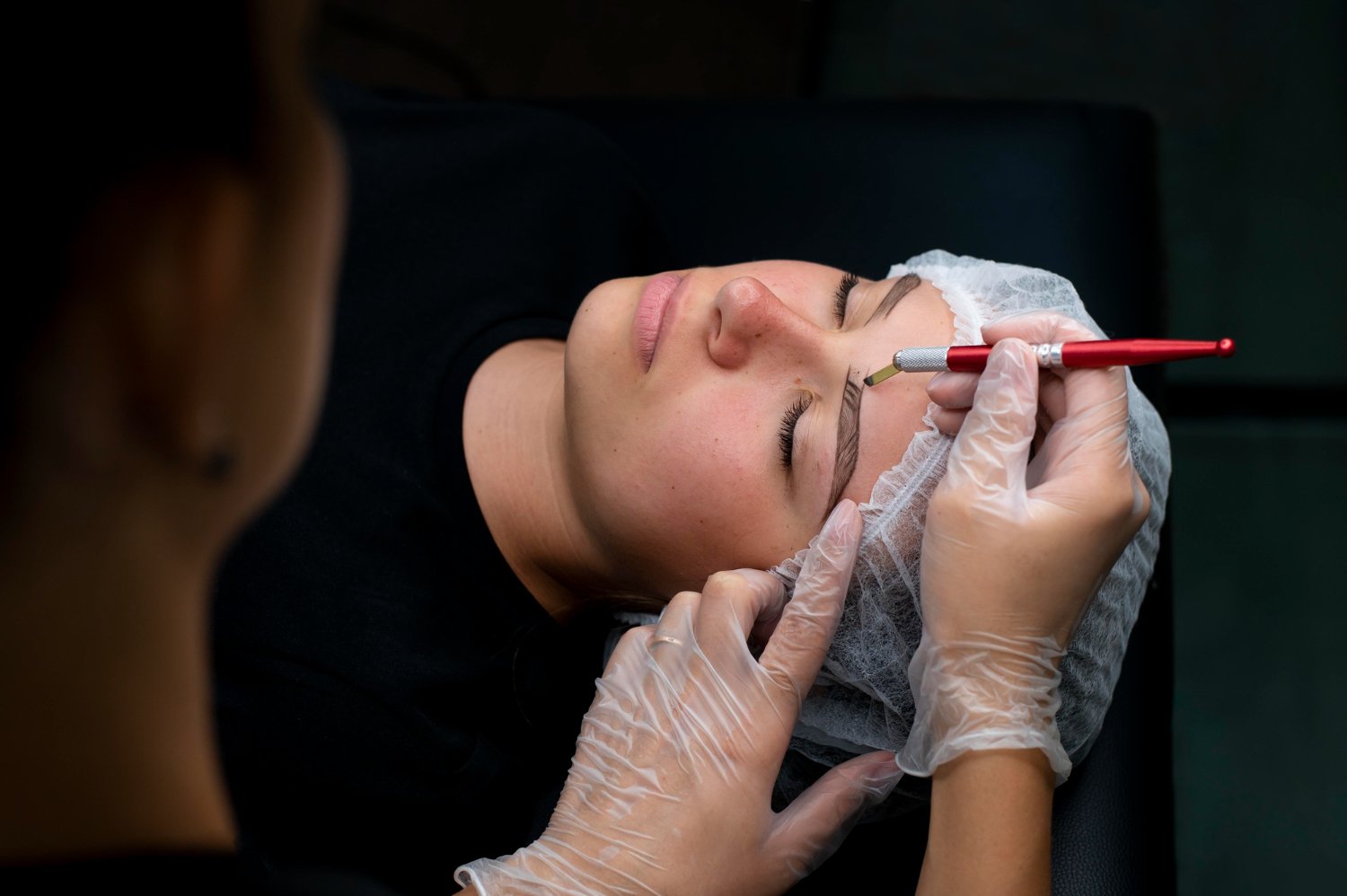
You can review our services or contact us with any healing or color concern.
Gray brows are frustrating, but they are largely preventable with the right pigment, the right depth, and honest aftercare. If you have dealt with a gray result before, or you want to get your brows done right the first time, Missouri Nails & Lashes offers microblading in a clean, calm setting with an expert team. Our cozy studio and friendly staff make the whole process feel like pampering, not a gamble. Get started with Missouri Nails & Lashes and book your consultation today.
Frequently Asked Questions
Why are my microbladed brows turning gray?
Gray or ashy healed results usually trace back to pigment selection and implantation depth rather than pigment alone. Carbon-based pigments can show a cooler gray tone as the warmer organic components fade, and pigment placed too deep or over-saturated can shift blue-gray. Skin undertones matter too: an ash-based pigment on warm skin can heal murky. Changes in healed color can stem from pigment aging, technique, or aftercare.
How can I prevent my microblading from fading into an ashy color?
Protect the warmer tones in your pigment. Apply SPF to the brow area daily once healed, since UV exposure fades warm pigment first and leaves the cooler carbon base visible. Keep the brows protected from harsh skincare ingredients like retinoids and exfoliating acids, and follow any aftercare instructions you are given.
Does skin undertone affect microblading pigment color?
Yes. Microblading pigment color theory starts with matching the pigment’s undertone to your skin, not just your hair color. Cool or ash-based pigments on warm or olive undertones can heal gray or murky, while overly warm pigments on cool skin can heal orange. Matching pigment undertone to your skin is an important part of color selection.