Last Updated: November 18, 2026
Quick Summary
Eyebrow tinting is a temporary dye service that darkens existing brow hairs and lasts about 3-6 weeks, while microblading is cosmetic tattooing that deposits pigment into the skin in hair-like strokes and lasts months, often 12-24. Tinting is faster, cheaper and non-invasive; microblading is costlier and semi-permanent, best for sparse or uneven brows.
- Tinting only works on existing hair, so it cannot fill a gap or reshape a brow.
- Most people re-tint every few weeks, and a typical salon tint costs $20 to $40.
- Microblading artists usually schedule a perfecting session at roughly 6 to 8 weeks.
- Choose lamination if your hairs grow in odd directions and you want a groomed shape.
- Booking microblading on price alone is the most common mistake we see.
Table of Contents
- Eyebrow Tinting vs Microblading: The Core Difference
- Side-by-Side Comparison: Longevity, Cost, and Invasiveness
- Eyebrow Tinting vs Microblading Cost Over Time
- Eyebrow Tinting Before and After: What to Expect
- Eyebrow Tinting vs Lamination vs Microblading
- Microblading vs Nanoblading: Does the Needle Matter?
- Safety, Skin Type, and Choosing Your Brow Artist
- Booking Your Brow Consultation at Missouri Nails & Lashes
- Frequently Asked Questions
Eyebrow Tinting vs Microblading: The Core Difference
Eyebrow tinting vs microblading comparison comes down to one question: does the treatment color the hair you already have, or does it create the illusion of hair where none grows? Eyebrow tinting is a temporary dye service that darkens existing brow hairs. Microblading is a form of cosmetic tattooing that deposits pigment into the skin in fine, hair-like strokes. In practice, tinting is a color service, while microblading is a construction service.
That distinction shapes everything else, including price, pain, longevity, and who each treatment actually suits. Below, we’ll show you exactly how each one works, what results look like, and how to decide which fits your brows and your budget.
But first, here’s what most guides get wrong: they compare the two as if they compete for the same client. They usually don’t. The Skincare Source guide on eyebrow tint vs microblading describes tinting as darkening existing hairs for temporary enhancement, while microblading creates semi-permanent hair-like strokes. One enhances what’s there; the other builds what isn’t.
How Eyebrow Tinting Works
A brow tint is a dye application. Your brow artist mixes a semi-permanent color, brushes it over the brow hairs, lets it process for a few minutes, then wipes it away. The pigment coats the hair shaft, so every existing hair reads darker and more defined. Skin beneath the brow may pick up light staining that fades within days.
The whole appointment is quick, and most people feel nothing more than a cool brush against the skin. Because tinting only works on hair, it cannot fill a gap or reshape a brow that has no hair to color. That limitation is the single most important thing to understand before booking.
How Microblading Works
Microblading is cosmetic tattooing. A brow artist uses a hand tool with a blade of tiny needles to scratch pigment into the upper layers of skin, one fine stroke at a time, following the direction of natural hair growth. The result is a pattern of hair-like strokes that reads as fuller, more defined brows.
Because it works in the skin rather than on the hair, microblading can build shape and density where brows are sparse or uneven. It also involves a healing period, and the color softens as the skin renews. If you want to understand what recovery actually involves, our guide to the microblading healing process walks through each stage.
Side-by-Side Comparison: Longevity, Cost, and Invasiveness
Here is the short answer: tinting is faster, cheaper, and temporary; microblading is slower, costlier, and semi-permanent. Neither is “better” in the abstract. The right pick depends on how much brow hair you have and how long you want the result to hold.
| Factor | Eyebrow Tinting | Microblading |
|---|---|---|
| What it treats | Existing brow hair | Skin, creating hair-like strokes |
| Longevity | About 3-6 weeks | Months, often 12-24 |
| Invasiveness | Non-invasive, no downtime | Semi-permanent tattoo, healing period |
| Discomfort | Minimal | Numbing used; some discomfort |
| Best for | Full brows needing definition | Sparse, thin, or uneven brows |
| Maintenance | Frequent re-tints | Periodic touch-ups |
The invasiveness gap matters more than most comparisons admit. Tinting sits on the surface. Microblading breaks the skin, which means aftercare, healing time, and a provider you genuinely trust.
Eyebrow Tinting vs Microblading Cost Over Time
The honest answer on cost: tinting is cheaper per appointment, but you pay it far more often. Microblading costs more upfront, then needs periodic touch-ups. Over a year, the gap narrows more than the sticker price suggests, and over three years, it can narrow further still. Most guides stop at the single-session price. Here is the math that actually matters.
Published figures give a rough anchor. L’Oréal Paris’s comparison of microblading and tinting notes that microblading touch-ups start around $300, and characterizes brow tinting as the more affordable option without quoting a tint price. Treat those as approximate references, not quotes.
What actually drives your total:
- Tint frequency: most people re-tint every few weeks to maintain depth.
- Microblading touch-ups: color softens over time, so plan on refreshes to keep strokes crisp.
- Your brow hair: fuller brows get more mileage from tinting; sparse brows may need microblading to see real change.
The Year-One Math
A brow tint is a recurring expense, so the annual total depends almost entirely on how often you go. If your artist recommends a refresh every four weeks, that is 13 appointments a year. At a typical salon price of $20 to $40 per tint, year one runs roughly $260 to $520. Stretch to every six weeks and you are at about 9 appointments, or roughly $180 to $360. Neither figure includes the cost of at-home brow pencil or gel you may still buy between visits.
Microblading front-loads the cost. Microblading front-loads the cost, with a first session followed by a perfecting visit and periodic touch-ups, which is why it is worth asking for current pricing before you compare.
The Multi-Year View
Tinting is a repeating expense, while microblading typically involves an initial session followed by less frequent refreshes. How the totals compare depends on current pricing from your provider.
The right question is not simply which is cheaper, but whether you would rather pay less often or more often.
Costs the Sticker Price Hides
- Time: a tint is a short appointment; microblading plus healing is a multi-week commitment.
Pricing for both services varies by provider, artist skill, and your brow goals. For current pricing or a quote, contact Missouri Nails & Lashes through the website.
Eyebrow Tinting Before and After: What to Expect
Expect a visible difference in depth and definition, not a change in brow shape. Before an appointment, a brow artist typically assesses natural brow color and skin tone, then selects a shade. During the service, tint is brushed through the brows and processed. Afterward, hairs look darker, more uniform, and better defined, especially where color was uneven or faded.
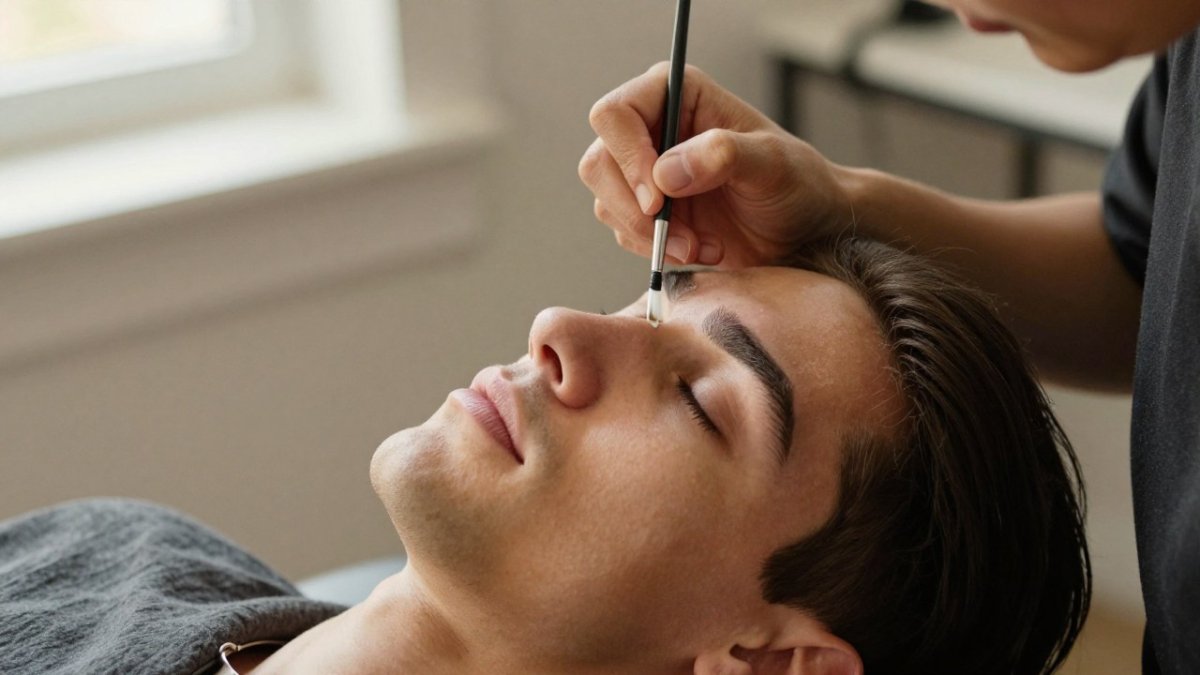
A few realistic notes. Fresh tint can look slightly deeper on day one and settles within a day or two. If your brows are very sparse, the before-and-after change will be subtle, because tinting has little hair to work with. That is the clearest signal that microblading may serve you better.
What Microblading Looks Like Before and After
Microblading is a different before-and-after story because it changes the skin, not just the hair. Immediately after the session, strokes look crisp and often darker than the final result, and the surrounding skin may be pink or slightly swollen. Over the next week the pigment darkens further as the skin begins to heal, the phase most artists call the “ugly duckling” stage, before it lightens noticeably around weeks two and three. By week four, the color has typically settled into its healed tone, which is usually softer and slightly lighter than day one.
That is why most artists schedule a perfecting session at roughly 6 to 8 weeks: it is the first point at which the healed result is stable enough to judge and adjust. If you want to understand what recovery actually involves, our guide to the microblading healing process walks through each stage.
How Each Result Fades
Tinting fades gradually and predictably. Because the dye coats the hair shaft, it wears off as hairs shed and as shampoo and exfoliation strip color. Most people notice fading first at the tails and along the arch, where hairs are finer. There is no color shift to worry about, the tint simply gets lighter until it is gone, usually within 3 to 6 weeks.
Microblading fades in the skin, which is a slower and less even process. Pigment gradually breaks down and can shift warmer over time, which is why some healed brows read slightly red or ashy rather than the cool brown chosen on day one. Oily skin tends to blur strokes faster; sun exposure accelerates fading; and individual healing affects how much pigment the skin retains. If gray or ashy healed color worries you, our guide on how to keep microblading color from turning gray covers the causes and prevention.
What Brows Look Like Between Appointments
This is the part most comparisons skip. With tinting, you will see a clear fade line in the final week or two before your next appointment, and many people fill in with pencil or gel in the meantime. With microblading, the result is present every day, but it is not static, strokes soften, edges blur slightly, and the overall shape becomes less crisp as you approach touch-up time. Neither treatment looks bad between appointments; they simply age differently, and knowing which aging pattern you can live with is as important as the day-one result.
A realistic expectation for either service: the before-and-after is a change in definition and depth, not a change in the underlying brow shape you were born with. If you want a different shape, that is a conversation to have at consultation, not something either treatment delivers on its own.
Eyebrow Tinting vs Lamination vs Microblading
Three treatments, three different jobs. Tinting changes color. Brow lamination repositions and sets existing hairs to look fuller and more uniform. Microblading adds pigment strokes to the skin. Nirvana PMU’s brow treatment comparison separates them by need: tinting for full brows needing definition, lamination for unruly brows needing shape, and microblading for sparse or thin brows.
- Choose tinting if your brows are full but faded or uneven in color.
- Choose lamination if your hairs grow in odd directions and you want a groomed shape.
- Choose microblading if gaps, thinness, or missing tails are the real problem.
Lamination and tinting are often paired in one appointment. Microblading stands alone as the semi-permanent option.
Microblading vs Nanoblading: Does the Needle Matter?
The difference is the tool, not the goal. Nanoblading uses a finer needle configuration than traditional microblading, which can allow more precise, delicate strokes. Both are cosmetic tattooing, both deposit pigment into the skin, and both need the same aftercare and touch-up planning.
What most guides miss: the artist’s skill and your skin type affect the outcome more than the needle name. Oily skin, for example, can cause pigment to blur faster regardless of technique. If gray or ashy healed color worries you, our guide on how to keep microblading color from turning gray covers the causes and prevention.
Safety, Skin Type, and Choosing Your Brow Artist
Safety is where these two treatments diverge most. Tinting is generally considered low-risk, though a patch test is wise if you have sensitive skin or known dye reactions. Microblading breaks the skin, so hygiene, tool handling, and artist training matter.
Before booking microblading, consider asking:
- Is the artist trained and experienced in cosmetic tattooing?
- Are needles single-use and opened in front of you?
- Is the workspace clean and properly sanitized?
- Have they shown healed results, not just fresh ones?
- Do they screen for skin conditions and contraindications?
Skin type changes the recommendation too. Very oily skin may heal pigment unevenly. Sensitive or reactive skin may do better with tinting first. Our guide to the signs of high-quality microblading breaks down what separates a careful artist from a risky one.
Watch out: booking microblading on price alone is the most common mistake we see. Corrections cost more than doing it right the first time.
Booking Your Brow Consultation at Missouri Nails & Lashes
The simplest next step is to reach out with your brow goal, such as deeper color, a reshaped arch, or filling sparse areas. You can review the services we offer and contact us to schedule a time.
Missouri Nails & Lashes offers a clean, calm salon setting, and the brow services covered here are discussed with clients individually.
Your brows deserve a plan, not a guess. Missouri Nails & Lashes offers expert brow services, including eyebrow tinting and microblading, in a clean and relaxing studio. Our friendly team helps you choose the right treatment for your goals, with careful attention to hygiene and aftercare. Get started with Missouri Nails & Lashes and book a brow consultation that gives you a clear answer.
Frequently Asked Questions
Which is better, eyebrow tinting or microblading?
It depends on how much brow hair you have. Eyebrow tinting colors the hairs already there, so it works best on full or uneven brows that need definition and lasts about 3 to 6 weeks. Microblading adds semi-permanent hair-like strokes and suits sparse or thin brows, with results lasting months to years. If you have hair to color, tinting is the lower-commitment option; if you need structure, microblading does more.
How long does eyebrow tinting last compared with microblading?
Eyebrow tinting fades in roughly 3 to 6 weeks because the dye sits on the hair shaft and washes out over time. Microblading lasts much longer, with published estimates ranging from 12 to 24 months before a touch-up is needed. Fading speed depends on your skin type, aftercare, and sun exposure, so plan on more frequent appointments with tinting and a longer commitment with microblading.
How much does eyebrow tinting cost compared with microblading?
Tinting is generally the more affordable treatment per appointment, though exact pricing varies by provider and location. Microblading costs more upfront. Because tinting needs repeating every few weeks and microblading needs periodic touch-ups, compare the total spend over a year rather than the single appointment. Ask for current pricing before booking.
Can you tint your eyebrows after microblading?
Yes, once your brows have fully healed. Microblading creates tiny strokes in the skin, and the area needs to recover before any dye is applied on top. Wait until your artist confirms healing is complete, then tinting can refresh the surrounding natural hairs. Tell your brow artist about your microblading history so they can adjust the tint shade and avoid over-darkening the healed strokes.
Is microblading worth it for sparse eyebrows?
For sparse or thin brows, microblading often delivers what tinting cannot. Tinting only colors existing hair, so if the hair is very fine or missing, there is little to darken. Microblading adds hair-like strokes that build shape and definition where hair is absent. The trade-off is cost, healing time, and a longer commitment, so book a consultation to confirm your brows are a good candidate.