Last Updated: November 15, 2026
Quick Summary
Preventing microblading color from turning gray means protecting pigment from the start: keep UV and friction off the brow during the first ten days, wear daily SPF 30+ once healed, and avoid picking scabs. Pigment placed too deep, cool undertones, and sun exposure are the main causes of a gray or blue cast.
- Cleanse once or twice daily with a mild, fragrance-free cleanser and apply a rice-grain amount of approved ointment.
- Over-moisturizing softens scabs so they come off early with pigment attached, just like under-moisturizing.
- Judge a true gray or blue shift no earlier than week 4-6, when color settles into its healed tone.
- At two years, warm and red tones fade first, exposing cooler blue-gray undertones underneath.
- Book a professional assessment for pronounced gray, blue or ashy shifts, textured skin, or before a cover-up.
Table of Contents
- Why Microblading Turns Blue or Gray
- Microblading Aftercare That Protects Color
- Microblading Turned Grey After 2 Years: What It Means
- Microblading Removal and Correction Options
- Frequently Asked Questions
Why Microblading Turns Blue or Gray
Gray brows usually come from pigment placed too deep, cool undertones, or too much sun. A 2021 review in the National Institutes of Health’s microblading pigment study found repeated sun exposure can change ink color, and iron-oxide-based inks often turn reddish over time. Pigment sitting too deep heals with a cool, bluish cast; over-saturation and dense strokes worsen it.
For prevention, read our guide on preventing gray microblading pigment results that last.
Microblading Aftercare That Protects Color
Aftercare decides whether good pigment placement holds its warmth or drifts cool. Keep skin calm and clean, and keep UV and friction off the brow, the first ten days shape final tone more than any product.
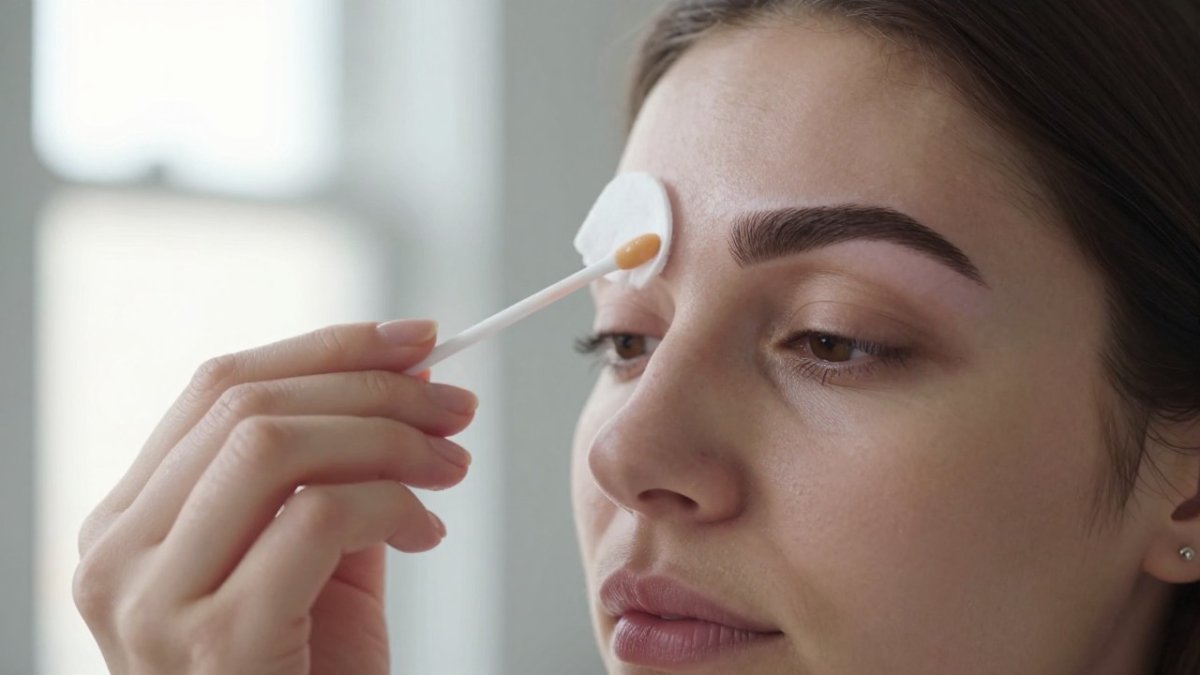
A day-by-day aftercare timeline
Days 1-2. Cleanse once or twice daily with a mild, fragrance-free cleanser and lukewarm water, pat dry, and apply a rice-grain amount of artist-approved ointment. The brow will look darker and warmer than the final result, normal, not gray.
Days 3-5. Light flaking starts. Moisturize thinly, resist scrubbing, and add ointment rather than water if the brow feels tight.
Days 6-10. Flaking and scabbing peak, then release. Color may look patchy and slightly ashy mid-heal as pigment-tinted skin sheds, most people panic here, but the pigment usually has not turned gray.
Weeks 2-4. The brow looks lighter and softer as skin renews; cool or ashy patches are still healing, not a final color shift.
Week 4-6. Color settles into its healed tone, the earliest point a true gray or blue shift can be judged, and when a touch-up is typically scheduled.
Do and don’t during healing
- Do keep the brow dry except for cleansing and ointment for the first week.
- Do sleep on your back or a clean pillowcase to reduce friction.
- Do wear a wide-brim hat outdoors and keep direct sun off the brow.
- Don’t pick, scratch, or rub scabs, this pulls pigment out and leaves patchy color.
- Don’t apply unapproved creams, acids, retinoids, or exfoliants.
- Don’t book facials, saunas, or heavy sweating during the first week.
Over-moisturizing is as damaging as under-moisturizing, a thick layer softens scabs so they come off early with pigment attached.
Sun protection after healing
Once healed, UV exposure is the biggest long-term threat to color. Daily SPF 30+ on the brow, plus a hat outdoors, slows the fade that exposes cooler undertones. Avoid tanning beds entirely.
For a stage-by-stage breakdown, see the microblading healing process explained.
Microblading Turned Grey After 2 Years: What It Means
Gray brows at two years are common and rarely damage. Pigment is a suspension of iron oxides and other colorants the body slowly breaks down and the sun slowly shifts, warm and red tones fade first, exposing cooler blue-gray undertones. Pigment implanted too deeply also reads cooler as it ages.
How skin type and healing change the outcome
Healing can differ from person to person. Skin type affects how pigment settles, so results can vary. Healing speed, aftercare, sun habits, and medications affecting skin turnover all shape color at two years, so judge gray on your own brow, not someone else’s photo.
Is it healing color or a lasting gray result?
Healing color settles within four to six weeks; anything still gray after that is a true color shift needing correction, not time. At two years the brow is fully healed, so a gray cast is a pigment and fade issue. Uniform coolness points to pigment undertone and fade; patchy gray points to depth inconsistency or uneven retention.
When to seek professional assessment
Book an assessment if the gray is pronounced, the brow has shifted blue or ashy rather than simply light, the skin is textured or scarred, or you are considering a cover-up. A qualified artist or removal specialist can judge depth, pigment load, and skin condition in person, none of which a photo reliably shows. Bring your procedure date, touch-up history, and healing products.
What correction can realistically achieve
Correction is not a reset button. A warm neutralizing tone can soften mild gray, but it is often temporary when pigment sits deep, and layering more pigment over heavy gray can look denser and muddier over time. Laser removal clears the canvas but needs multiple sessions, carries risks such as hypopigmentation or scarring, and is not suitable for every skin tone or pigment. Waiting works only for mild, even fading, with no guarantee. A realistic plan combines professional assessment, a test spot where appropriate, and the expectation that correction may take more than one session.
Correction results vary, so get a professional assessment first. You can review our services or contact us to plan your next step.
Microblading Removal and Correction Options
You have three paths: color correction, laser removal, or waiting it out. A warm neutralizing tone can counter gray but is often temporary when pigment sits deep; laser removal clears the canvas; waiting works only for mild fading.
| Option | Best for | Realistic outcome |
|---|---|---|
| Warm-tone correction | Mild gray, shallow pigment | Softer, warmer tone, may need touch-ups |
| Laser removal | Deep or heavy gray pigment | Lighter brows, then a fresh start |
| Waiting it out | Slight fading only | Gradual lightening, no guarantee |
Correction results vary, so get a professional assessment first. You can review our services or contact us to plan your next step.
Gray brows are frustrating, but they are fixable. At Missouri Nails & Lashes, our team maps your skin and pigment before every session, works in a clean and safe space, and offers microblading alongside lashes and nails so your whole look stays consistent. Get started with Missouri Nails & Lashes and book a consultation for brows you will love.
Frequently Asked Questions
Can microblading turn gray while it is healing?
Yes. During the first two weeks, brows often look darker and cooler than the final result because pigment sits in the upper skin layers while scabbing and flaking occur. A slight gray or ashy cast during healing is usually temporary. Wait at least four weeks before judging the color, and contact your artist if the tone still looks cool once the skin has fully settled.
What should I do if my microbladed brows look gray after the scabs fall off?
Give it a few more weeks. Skin continues to heal and the color often warms up by the four-to-six week mark. If the gray tone persists, book a follow-up with your artist. Avoid picking scabs, over-moisturizing, and sun exposure during this window.
Can gray microblading be corrected or removed?
Both options exist. Results from correction and removal vary and depend on how deep the pigment sits in the skin. A consultation with a trained brow artist will help you decide which route fits your skin type, budget, and how long the gray tone has been present.