Last Updated: November 16, 2026
Quick Summary
Lash extensions for sensitive skin start with a patch test: adhesive goes behind the ear or on the inner wrist, then you wait 24 to 48 hours before committing. Choose a hypoallergenic adhesive, request sensitive-skin tape and lighter synthetic PBT fibers, and know that sensitivity is not the same as an allergy.
- A 2019 review found allergic blepharitis was the most common complication tied to lash extensions, at 79% of reported cases.
- No adhesive is truly allergen-free, and hypoallergenic formulas mean lower risk, not zero risk.
- Ask for hypoallergenic gel pads over paper tape and a wrist test strip first.
- Synthetic PBT fibers are uniform and less likely to trigger reactions than some natural materials.
- If you see swelling, discharge, or pain after application, remove the lashes professionally and see a doctor.
Table of Contents
- Start With a Lash Extension Patch Test Before You Commit
- Choose a Hypoallergenic Lash Extension Adhesive
- Ask for Lash Extension Tape for Sensitive Skin
- Pick Lash Materials That Suit Sensitive Eyes
- Know the Difference Between Sensitivity and Allergy
- What the Evidence Still Cannot Tell Us
- Book With a Technician Who Handles Sensitive Skin
- Frequently Asked Questions
Start With a Lash Extension Patch Test Before You Commit
A patch test is the most important step before any lash extension appointment for sensitive skin: adhesive goes behind the ear or on the inner wrist, then you wait 24 to 48 hours. At Missouri Nails & Lashes, we treat this step as non-negotiable for anyone with a history of reactions. A 2019 review of ocular complications found allergic blepharitis was the most common complication tied to lash extensions, at 79% of reported cases.
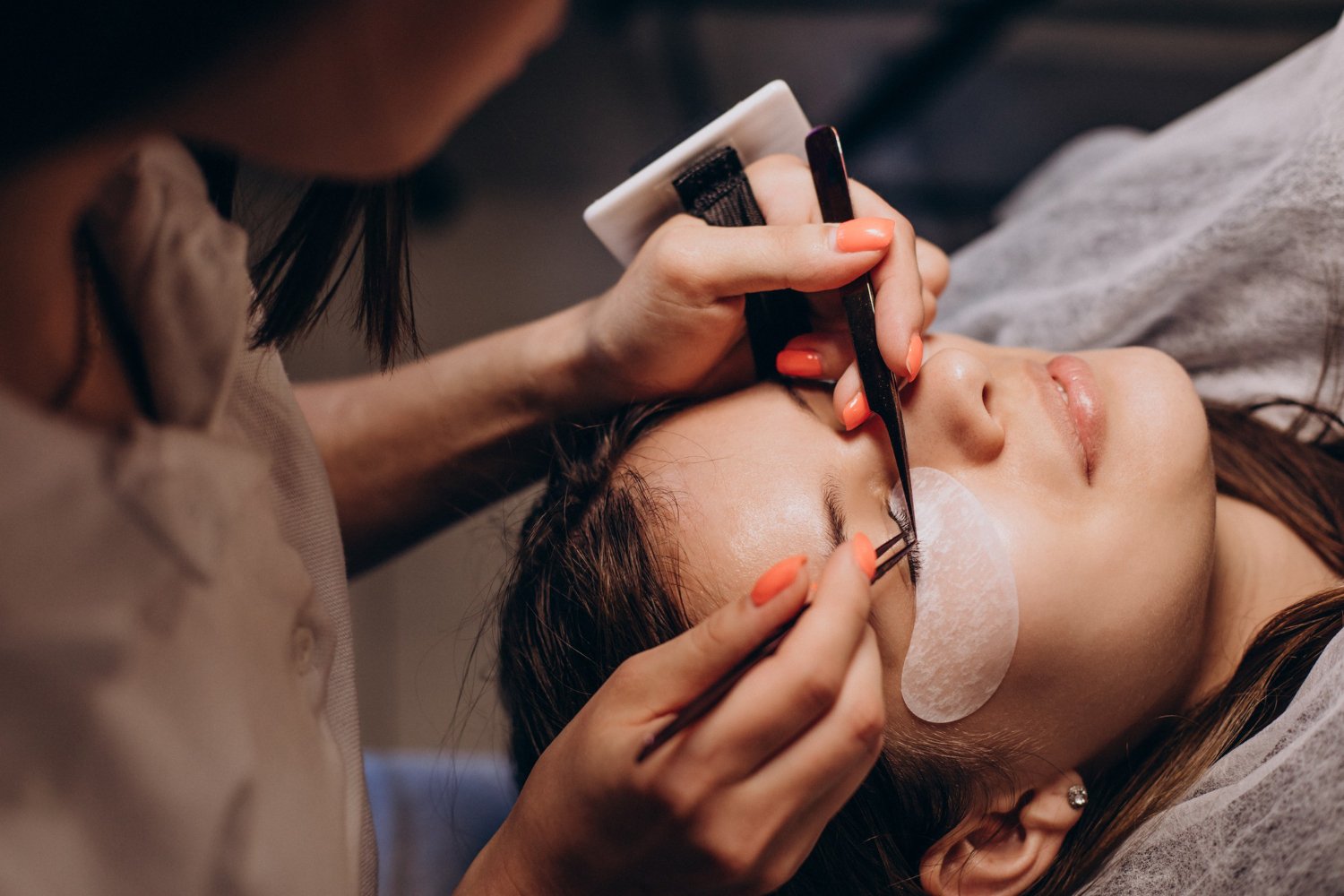
Share your full allergy history, photograph the spot, and report any redness, itching, or swelling before your appointment. Ready to schedule? Review our services or contact us for a consultation.
Choose a Hypoallergenic Lash Extension Adhesive
No adhesive is truly allergen-free, but most standard glues rely on cyanoacrylate, a common source of reactions; a hypoallergenic lash extension adhesive uses a gentler, lower-fume formulation. Ask what the main ingredient is, when the bottle was opened, and whether a sensitive-skin formula is offered. “Hypoallergenic” means lower risk, not zero risk. For more, read our guide on signs of high quality eyelash extensions.
Ask for Lash Extension Tape for Sensitive Skin
Lash extension tape for sensitive skin sits under the eye, and the wrong tape can cause more trouble than the lashes. Request hypoallergenic gel pads over paper tape, low-tack sensitive-skin tape, and a wrist test strip first. Proper isolation separates each natural lash; poor isolation causes clumping, pulling, and discomfort sensitive clients feel fast. Our eyelash extension care routine covers cleansing and oil-free products in plain steps.
Pick Lash Materials That Suit Sensitive Eyes
The best eyelashes for sensitive eyes are usually lighter, finer fibers rather than heavy volume sets. Synthetic PBT fibers are a common recommendation because they are uniform and less likely to trigger reactions than some natural materials; Deka Lash notes it often recommends premium synthetic lashes made from materials such as PBT for guests with sensitivities. Finer diameters, such as the ultra-fine 0.03 mm and 0.05 mm extensions listed in 2026 lash trend coverage, reduce weight on the natural lash.
| Material | Feel | Sensitivity Risk | Best For |
|---|---|---|---|
| Synthetic PBT | Light, uniform | Lower | Most sensitive clients |
| Silk | Soft, natural | Moderate | Clients wanting a softer look |
| Mink-style | Fluffy, full | Higher | Clients without known sensitivities |
Know the Difference Between Sensitivity and Allergy
Sensitivity usually means mild redness, itching, or watery eyes that settle down; an allergic reaction can bring swelling, pain, and persistent irritation that worsens, and the American Academy of Ophthalmology notes allergic reactions can cause pain, itching, redness, and swelling. If you see swelling, discharge, or pain after application, do not wait it out: remove the lashes professionally and see a doctor.
What the Evidence Still Cannot Tell Us
The research on long-term eye effects is thinner than most salons admit. The authors of a 2024 study on lash extensions and the ocular surface state that no prospective study had demonstrated how the procedure affects the ocular surface, particularly eye dryness. A separate 2026 study reported an association between semi-permanent extensions and reduced tear stability, increased staining, and higher rates of lash abnormality.
Book With a Technician Who Handles Sensitive Skin
Ask about patch testing policy, adhesive ingredients, and how the salon handles a reaction.
Sensitive skin should not shut you out of beautiful lashes. Missouri Nails & Lashes offers a calm, clean setting with expert lash artists, patch testing before application, and a full menu that includes eyelash extensions and brow services. Get started with Missouri Nails & Lashes and book a consultation that puts your comfort first.
Frequently Asked Questions
What eyelash extensions are best for very sensitive eyes?
Lighter, finer fibers tend to work best. Lighter, finer fibers generally add less weight to the natural lash. Tell your technician about any past reactions before the appointment, and ask which lash materials and adhesives they use.
Should I get a patch test before lash extensions?
Yes, especially if you have sensitive skin or a history of allergies. A patch test can give you and your technician useful information before committing to a full set of lash extensions. It does not guarantee you will never react.
What should I do if my eyelids itch or swell after lash extensions?
See a doctor if symptoms are severe. The American Academy of Ophthalmology notes that allergic reactions can cause pain, itching, redness, and swelling. Do not pick or pull the extensions yourself, since that can damage natural lashes.